
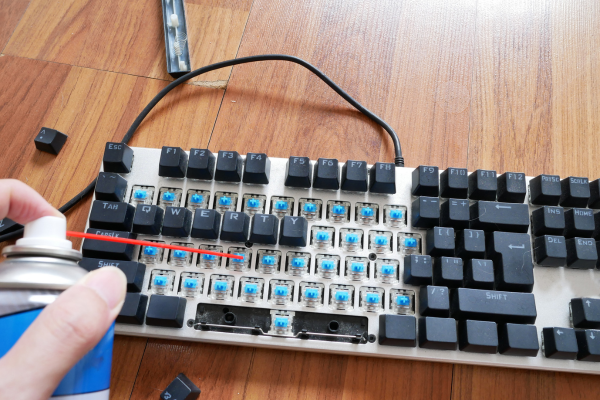
My first mechanical keyboard was soldered, and I didn’t even realize that was a meaningful distinction until I wanted to try a different switch six months in. What should have been a quick, fun experiment turned into researching soldering irons, watching a dozen tutorial videos, and psyching myself up to do something that felt genuinely risky to my only keyboard. Looking back, I wish someone had told me upfront that hot-swap boards existed and that they’d have saved me all of that hassle.
If you’re weighing whether hot-swap actually matters for a beginner, the short answer is yes, almost universally. Here’s why.
What Hot-Swap Actually Means
A hot-swappable keyboard has small sockets built into the circuit board instead of switches being permanently soldered in place. This lets you pull a switch straight out with a simple tool and press a new one in, no heat, no risk of damaging the board, no technical skill required beyond careful hands.
A non-hot-swap (soldered) board has each switch permanently attached with two solder joints. Changing a switch means desoldering the old connection and soldering in a new one, a process that requires equipment, some practice, and genuine risk of damaging the PCB if done carelessly.
Why This Matters So Much for Beginners Specifically
The single biggest reason hot-swap matters for someone new to the hobby is that you almost certainly don’t know your switch preference yet. Reading descriptions of linear, tactile, and clicky switches, or even watching sound test videos, only gets you so far. The only real way to know what you like is to actually type on different switches, and a hot-swap board lets you do that cheaply and without commitment.
I’ve watched several friends go through this exact journey: buy a soldered board with clicky switches because they looked cool in a video, realize within a week that the noise bothers them or their partner, and then feel stuck with a keyboard they can’t easily change. A hot-swap board turns that same mistake into a fifteen-minute switch swap instead of an entirely wasted purchase.
The Repair Angle Nobody Talks About Enough
Beyond experimentation, hot-swap sockets solve a much more mundane problem: what happens when a single switch eventually fails or feels inconsistent. On a soldered board, a single dead key can mean either living with it or breaking out a soldering iron for a repair that’s honestly more advanced than most beginners are comfortable attempting. On a hot-swap board, a failing switch is a five-minute fix: pull it out, push a replacement in, done.
Given that keyboards get heavy daily use for years, this alone is a meaningful practical advantage that has nothing to do with tinkering or hobbyist enthusiasm.
Are There Any Real Downsides?
Being fair to the other side: soldered connections are marginally more rigid, which purists argue gives a very slightly crisper, more direct feel and sound. In practice, this difference is subtle enough that most people, including experienced hobbyists, can’t reliably tell the difference in a blind test. Modern hot-swap sockets have also improved significantly, and many premium hot-swap boards now sound and feel excellent out of the box.
There is a small risk of bent pins if you’re not careful when reinserting switches, something we covered in more detail in our guide to switch swapping for beginners. But this is a minor, easily avoidable issue with a bit of care, not a serious downside worth avoiding hot-swap over.
The price gap between hot-swap and soldered boards has also narrowed considerably. A few years ago, hot-swap carried a real premium; today it’s common even on budget boards, so you’re rarely paying much extra for the flexibility.
Watch the Case for Hot-Swap
If you want to hear the argument laid out directly, this video covers the core reasons hot-swap is worth prioritizing, especially for anyone still figuring out their switch preferences:
Watching content like this before your first purchase can save you from exactly the mistake I made with my first soldered board.
What to Check Before Buying
Not every hot-swap board is created equal, so a few quick things worth checking:
- Pin compatibility. Most modern hot-swap sockets accept both 3-pin and 5-pin switches, but it’s worth confirming before buying switches separately, especially with budget or off-brand boards.
- Socket brand. Kailh sockets are the most common and reliable in this price range. Higher-end boards sometimes use Millmax sockets, which are considered more durable for repeated swapping, though this matters more to enthusiasts constantly changing switches than to a beginner doing it occasionally.
- Whether switches are included. Some hot-swap boards ship with switches pre-installed as a convenience, others are sold as barebones kits requiring you to buy switches separately, which we covered in our barebones vs. pre-built comparison.
My Honest Recommendation
Unless you’ve already used several different switch types extensively and know with certainty exactly what you want, hot-swap is worth prioritizing for your first keyboard, full stop. The flexibility costs you very little in 2026’s market, and the downside protection alone, being able to fix a single dead key without a soldering iron, is reason enough on its own.
Once you’ve got a hot-swap board in hand, the fun part starts: actually trying different switches to figure out your preference. Our linear vs tactile vs clicky guide is a good starting point for narrowing down what to try first, and if you want to explore quiet options for shared spaces, our budget-friendly silent switches roundup covers solid choices that won’t break the bank while you’re still experimenting.
Wrapping Up
Hot-swap capability removes almost all of the risk and cost of figuring out what you actually want from a keyboard. For a beginner especially, who likely doesn’t know their switch preference yet, this flexibility is worth far more than the marginal, mostly theoretical feel difference that soldered boards offer. Unless you have a very specific reason to go soldered, hot-swap is the safer, smarter starting point.